Blog

Exploring Chronic Health Issues

Do you struggle with a chronic health issue and/or chronic pain? Do you feel hopeless that you can ever shift it? Would you like to go deeper into what your body might be trying to communicate?

“Healing severe or chronic pain, I believe, includes transforming our relationship to the pain, and, ultimately, it is about transforming our relationship to who we are and to life.”—Sarah Anne Shockley

Let’s be honest for a minute. Having a chronic health condition and/or chronic pain sucks. There are no two ways about it. This blog post isn’t intended to diminish in any way how debilitating and devastating having a chronic condition can be. Instead, I hope to provide another possibility for how to relate to the situation and to your body. In my experience, long-term health issues arise when something is out of balance physically, emotionally, and/or spiritually. While focusing on treating the symptoms is one choice, I believe that exploring what our bodies and psyches are trying to communicate is ultimately more effective.

The following are 4 tips for beginning to explore your chronic condition.

  1. Acknowledge the pain and anger

The first step is allowing space for the emotions and thoughts that arise when you think about your situation. Have a venting session with yourself. Say or write everything that you are thinking and feeling. For example: “This sucks!” “It’s so unfair” “This isn’t how things were meant to be” “Why me?” “What did I do to deserve this?” “Nobody cares” “I must be a terrible person for this to happen to me” and so on. You can also write a list of emotions that are coming up for you. Rage, hopelessness, grief – whatever it may be. To the extent possible, allow it to be OK to have these emotions.

  1. Accepting what is

Common cultural wisdom has it that the only way to overcome a condition is to go to war with it and come out the winner. Anything else is seen as giving up. While this can be a helpful approach for accessing the hope and inner resources necessary to healing, resisting what is may cause an inner split between our reality and how we want things to be. Acceptance is not the same as resignation. It means shifting from a small contracted place of fear to one where there is space for everything to be as it is. Including the parts that are resisting your current situation (which is what we did above).

Having listed your thoughts and beliefs about the situation, I invite you to write or say a statement that both acknowledges the above, and makes room for a little bit of acceptance. For example: “Even though I have this condition and I HATE it, and I’m fighting it tooth and nail (because who wants this!), I’m open to accepting that this is my situation for now.”

  1. Moving towards the body

Chronic conditions often (though definitely not always) arise when there is already some disconnect from our bodies. For example, in order to survive we learned to rely on our minds and be in control as much as possible. This usually means not trusting the body and its emotions, which can seem messy and unpredictable. Or we learned to be ashamed of our bodies. Experiences of trauma and coping strategies of disassociation also create a rift with our bodies.  When we have a chronic condition – which is often our body’s way of screaming for our attention – we move further away because being in our bodies feels so unbearable.

Part of the healing process is to slowly learn to move towards the body, and begin a process of reconciliation.  If this is physically possible, I recommend gently squeezing your body from head to toe. Take deep breaths as you go, and if it works for you perhaps say hi to each body part you are touching. This doesn’t need to take longer than 2-3 minutes (although you can always take more time if you wish). I suggest spending a bit more time on your feet. If touching your body is painful or not possible, I invite bringing your attention to each body part (from head to toe), and breathing into each one. Do this every day, ideally once in the morning and once in the evening, for a month.

  1. Listening

Once you start having a bit more of a connection with your body, you may want to explore what your body is trying to communicate with you. Close your eyes, and bring to mind the chronic health issue you are struggling with. Notice any area of your body that feels painful, achy, contracted or uncomfortable. To the extent possible, take nice gentle breaths into the area. Allow yourself to get a little closer to the sensations then you might usually. Ask yourself, if there was an emotion associated with this health issue and/or pain, what emotion might it be? If nothing comes up, that’s absolutely time. Ask your body if it has a message or a request from you. See if you can receive the responses with gentleness. I recommend checking in with your body in this way at least once a week.

Copyright © 2018 by Jenny Brav. All rights reserved.   


Exploring Chronic Health Issues2022-02-03T13:49:35+00:00

Releasing Limiting Beliefs *

Is it challenging to create the life you know you deserve? Do you find yourself repeating the same patterns over and over again?

“Learning too soon our limitations, we never learn our powers.”Mignon McLaughlin

As children, we all experienced some level of wounding due to unmet needs and/or direct trauma. As a result, we subconsciously developed beliefs about ourselves or the world to help explain what we were experiencing. For example: “I’m not enough,” “Others can’t be trusted,” “I can’t make mistakes,” “I need to stay small to be safe,” and “I don’t belong.” These beliefs in turn led us to adopt coping strategies to try to manage in a world where “not belonging” was our daily reality.

While these beliefs have the adaptive function of trying to make sense of our circumstances in the best way we can when we are children, if we don’t become aware of them and actively work on changing them as adults, they can truly hold us back. When old, outdated beliefs are still running us, we may attract situations that serve to reinforce them – until we are able to see them as opportunities for healing and clearing.

The following are 7 tips for releasing limiting beliefs:

1) Notice when you’re contracted

Limiting beliefs are often so difficult to identify, because they feel 100% true in our bodies and psyches, and every instance that triggers those feelings appears to be further proof of their veracity.

In order to become aware of these beliefs, I invite you to start paying attention to your physical sensations. Limiting beliefs are by definition tight and constrictive. Notice when your body feels contracted. What thoughts or emotions (such as fear or anger) are present?  What are you telling yourself about the situation? I also invite you to track recurring patterns, as they are generally a sign of a limiting belief needing updating.

2) Identify your beliefs

Now that you’ve started tracking recurring patterns and feelings of contraction, I invite you to jot down beliefs that might be associated with them. For example: “I’m unlovable,” “The world is out to get me,” “I’m only safe when I’m in control,” and “I have to be perfect to be accepted.” Once you have identified the beliefs, you may think about recent (or not so recent) situations that seemed to prove this belief true. How pervasive is this belief in your life?

 3) Trace the belief to its origin

If you have listed more than one belief, pick one that feels particularly charged or current. What does it feel like in your body when you feel into that belief? Is there an area that feels tight, achy or fluttery, for example? Or, conversely, do you leave your body? Imagine that you are tracing that feeling back in time, to a time when you first started believing this. Is there a memory or timeframe associated with it? What was happening at the time? If nothing comes up for this question, you can always skip it.

If it feels like you always had that belief and can’t trace it back to a specific time frame or memory, then you may have inherited the belief from your parents, caregivers or other family members. What were their circumstances that might have led to that belief? If you do not know, that’s OK.

4) Identify the wound

We develop beliefs in order to try to compensate for wounds and/or unmet needs. Imagine that you are lifting up the belief you identified (for example, “I can’t rely on anyone but myself”) and looking underneath it. What is the emotion underneath the belief (i.e. grief, terror, anger, loneliness, helplessness, and so forth)? What is the unmet need? This might include the need for safety, love, acknowledgment, connection, autonomy, for example. If you traced the belief back to a family member, you may want to guess what their unmet need was.

5) Send empathy to the belief

I invite you to send empathy to the part of yourself that developed this belief in order to somehow soothe the pain of the unmet need. If you accessed a memory linked to this belief, you can send the empathy to your younger self. You might acknowledge that it was smart to develop this belief as a result of your circumstance. You can do the same with any family member you identified as being associated with this belief. If you didn’t access any memories/ancestors, you may just want to put your hands on the part of your body that feels contracted. Close your eyes. Breathe, and allow yourself to feel the touch in that area. If you wish, you can whisper some words, such as “it’s OK.”

6) Upgrade your belief

Although the limiting beliefs we develop are often adaptive, when we don’t update them, we may end up recreating the very situation that wounded us in the first place. For instance, let’s say a child has parents who are so busy they don’t have time to pay attention to her. She might feel sad and lonely because her need for connection and affection isn’t being met. She develops the belief that she is unlovable. Due to that belief, whenever there’s an opportunity for her to get close to somebody she does something (unconsciously) to push them away. As a result, the belief she is unlovable and her feelings of sadness/loneliness are reinforced.

Ask yourself if you are ready to let go of this old belief. If you feel any tightening, anxiety, or doubt, then it probably means that part of you isn’t ready. I invite you to continue tracking the impact of the belief, and giving yourself empathy. If you feel an opening internally, lightness or a feeling of excitement in response to the question, then it means you are ready for the upgrade – to install the 2.0 version of the belief that matches your current circumstances.

What new belief would you like to have to replace the old one? For example, “it’s safe for me to ask for help.” You may want to write down the old belief, cross it off (or tear it up) and write the new belief. This could also be done as a ritual (i.e. lighting a candle, with a picture of your younger self) if that is a practice that resonates with you.

7) Find other ways to meet the unmet need

If you identified an unmet need, ask yourself if are there other ways you could try to meet that need. In the above example, if the emotion was loneliness and the unmet need was connection, what are ways you might meet that need? And as the outside world is often a reflection of our internal state, I invite you first to make a list of ways you might connect to yourself more. For example by reducing distractions, and making time for things that are nourishing for your mind, body and soul. Make a list of things you love doing, such as dancing, working out, eating good food, getting a massage, etc. See if you can do at least one a week. Once you feel more connected to yourself, you can make a list of things you could do to start building a sense of community.

Wishing you the best of luck in releasing the old beliefs and accessing your full potential.


Copyright © 2018 by Jenny Brav. All rights reserved.   

Releasing Limiting Beliefs *2023-07-25T15:27:40+00:00

Detox Your Thoughts *

Can your inner dialogue be pretty negative? Do you find your thoughts looping endlessly on the same track?

“The primary cause of unhappiness is never the situation but your thoughts about it” – Eckhart Tolle

Spring and summer are a good time to declutter. Many of us take the opportunity to clean out our closets and get rid of what we don’t need. We may also go on a cleanse or juice fast to flush out our intestines.

But what about detoxing our minds? Our thoughts can be pretty toxic – towards ourselves, others, or life in general. While negative or ruminative thinking often has a protective intention – to scan for danger and motivate us to survive if not succeed – the actual result is that we feel stuck and overwhelmed. Our thoughts can greatly contribute to (and even cause) our suffering. Unless we have an intentional practice such as meditation (and even if we do), our thoughts often run the show – unchecked.

Here are some indicators you might need a thought detox:

Inner Critic: You have a negative internal narrative that doesn’t let you off the hook. Feelings of being a fraud (i.e. the Imposter Syndrome), feelings of inadequacy, not being enough, feeling stupid or ugly, the thought “I suck” are all examples of an active inner critic.

Judgment: You catch yourself habitually judging others and yourself. This is often linked to expectations and ideals of how we think things should we.

Resistance to what is: Similarly, you are often at war with the present moment, wishing things were different than how they actually are.

Anxiety/depression: You are prone to anxious, ruminative thoughts. Alternatively (or concurrently), you tend towards depression.

Negativity bias: You are often focused on what is wrong and what you don’t have.

Difficulty Sleeping: You struggle with sleeping enough – it might be hard to get to sleep, stay asleep or feel rested. While there may be a number of reasons for disturbed sleep that are not linked to our thoughts, the latter are often a contributing factor.

Future/past focus: You spend a lot of energy worrying about or planning for the future. Or you might cling to past stories and grievances.


If you identified with some or many of the above, you are not alone. Many of the indicators listed above were strategies we developed (or inherited) in order to better our lot and/or feel safe. However, it is possible to upgrade those strategies in order to feel lighter and more spacious.

The following are 7 tips for detoxing your thoughts:

1. Notice your thoughts

The first step is always awareness. Which of the above indicators did you identify with? You might want to keep a thought journal for a week. What triggers negative or ruminative thinking for you? What kinds of thoughts do you tend to have (i.e. self-critical, judgmental of others, anxious about the future, ruminating over the past…)?

2. Notice the impact

One you start tracking your thought patterns, notice the impact on you. How do you feel when you have those thoughts? What happens in your body – do certain parts contract, or do you leave your body? How do you think you might feel if you didn’t have the thought.

3. Get curious

Now that you have a sense of your pattern and its impact, I invite you to get curious. What are the thoughts trying to achieve for you? Are they trying to protect you from failure? Do they want to motivate you to be better? Are they trying to justify what you are feeling? Do they want to prevent you from feeling vulnerable and exposed?

What is the emotion behind the thoughts? Is there fear? Sadness? Anger? Hopelessness?

4. Thank the thoughts

Once you’ve identified what the thoughts are trying to achieve for you, send them gratitude for their intention. If it feels accessible/appropriate, you can also send gratitude to whatever younger version of you developed this pattern in order to feel a little safer.

5. Hit the pause button

Ask yourself, are the thoughts really achieving the intention they have for you? Do you feel more motivated to work harder after having the thought “I suck” (or whatever thought you had)? And if they aren’t, is there a different way you could be meeting those needs?

Next time you notice yourself going down the ruminative thinking rabbit hole, I invite you to pause. Thank the thought for its intention. And return to your body and your breath.

6. Develop a gratitude practice

Gratitude has almost become a buzzword, but it is a great antidote to the negativity bias. I invite you to keep a daily gratitude/appreciation/acknowledgment journal where you track everything you are grateful for. Be sure to write down self-acknowledgements. Doing this last thing before going to sleep can help quiet the part of the brain that often wakes up chewing on what it thinks needs fixing from the previous day.

7. Return to the present moment

Mindfulness is like gratitude, but it’s also a very helpful practice for learning to gain a little bit of distance from our mind’s ceaseless chatter. Practices which foster mindfulness – which include yoga, meditation, conscious walking, qi gong and so on – are great ways to begin to retrain the neural networks.


Detox Your Thoughts *2022-02-16T03:18:05+00:00

Releasing Judgment

Do you habitually judge yourself and/or others? Can judgment interfere with your inner knowing?

 “When we see the secret beauty of anyone, including ourselves, we see past our judgment and fear into the core of who we truly are – not an entrapped self but the radiance of goodness.” – Tara Brach

For most of us, judgment is such a pervasive part of our reality, it often flies under our radar. Our minds are constantly scanning and classifying our every experience: “good/bad,” “right/wrong,” “success/failure…” From a young age, most of us got clear incentives for what was deemed good behavior, and punishment or negative reinforcement for the bad. While we have probably all experienced how painful it is to be on the receiving end of judgment, that doesn’t stop us from judging ourselves and/or others on a daily basis.

Evolutionarily speaking, judgment is a powerful form of social control, as evidenced by complex judicial systems for regulating what is and isn’t acceptable group behavior. Shaming, peer pressure, and gossip are other ways that judgment can be used to get us to conform, and to punish us if we don’t. From a spiritual perspective, however, judgment of ourselves and/or others blocks healing. The antidote to judgment is curiosity and acceptance – qualities which can take quite some practice to cultivate.

The following are 6 tips for releasing your judgment.

#1 Being curious about your judgment

Most of us have a sense that being judgmental is a bad thing. However, judging our judgment only serves to reinforce it. Instead of pushing your judgment away, I invite you to take a step closer to it. Start noticing what kinds of situations or behaviors in yourself and others trigger your judgment. What does it feel like in your body when you are feeling judgmental? What kinds of things do you say to yourself or about others (even if only in your head)? Feel into what quality your judgment has. For example, is it sharp, self-righteous, self-deprecating, or whiny (and this might depend on the situation)?

#2 Understanding its function

Now that you have started to get more familiar with your judgment, I invite you to get curious about its function. Even when they end up being counter-productive, our patterns have a purpose. You might ask your judgment: “what are you trying to achieve for me?” Judgment of yourself and judgment of others may have a slightly different function, or it might be the same. For example, your self-judgment might be trying to motivate you to succeed, or may be a way to protect yourself from others’ criticism. Judgment of others might be a way of trying to control your environment, or to feel safe.

#3 Following the judgment to its root

Once you have a sense of what your judgment is trying to achieve for you, ask yourself “if there was an age associated with when I started using judgment as ___________ [i.e protection, motivation], what age would that be?” And see if any number pops into your head. Or you might follow the physical sensation of judgment in your body back in time, to a memory of when you first felt judged, or started judging yourself. Was someone in your family critical of themselves or of others? Once you have a sense of an age or a time-frame, you might imagine that you are sending this young version of yourself compassion for what they had to endure.

#4 Seeing judgment as a mirror

Our judgment of others is often a reflection of parts of ourselves we have a hard time accepting. In her seminal personal growth method The Work, Byron Katie shows how our judgment of others is usually a mirror for how we are treating them or ourselves by way of what she calls the “turnaround.” For more information, click here. Furthermore, what we are judging in others is often their wounded and/or their strategic self (rather than who they really are deep inside). The best way to help someone change is to reflect back their true self.

#5 Letting go of right and wrong thinking

As Rumi expressed so beautifully: “out beyond ideas of wrongdoing and right doing, there is a field. (…). When the soul lies down in that grass the world is too full to talk about.” Many of us spend our lives trying to get it right, and correcting others when they get it wrong. While we learned this as a way to try to feel OK about ourselves, this is a limiting lens through which to live our lives. Next time you find yourself caught up in right/wrong thinking, I invite you to pause. To breathe. And ask yourself if there is another way you could view the situation?

#6 Opening to the secret beauty

Once you are able to hold your judgment with compassion and understanding for what it’s trying to accomplish, you can start feeling into what’s wanting to unfold inside. When you feel judgment of yourself or others, turn your attention inward. Feel into your heart and your body. Ask yourself what is wanting attention. And start feeling into part of you that wants to be seen and accepted exactly as it is.

Releasing Judgment2017-11-01T22:10:43+00:00

Beyond Self-Doubt *


Does doubt get in the way of your desires and goals? Do you find yourself paralyzed with fear when making decisions?

“Our doubts are traitors, and make us lose the good we oft might win, by fearing to attempt.”

– William Shakespeare


Most (if not all of us) experience doubt at some point, a time when we are unsure of what to do or second-guess a decision we have made. For some, however, self-doubt is a crippling part of daily reality and can lead to paralysis and self-sabotage.

In my experience, self-doubt is a survival strategy that we may inherit from those around us, or learn at a time when being in our power feels dangerous. Just as bravado can be a false substitute for self-esteem, self-doubt can be a stand-in for humility. Wherever there is doubt, there is an internal split between our own knowing and the part of ourselves that has learned to mistrust our intuition.

The following are five tips for understanding and healing self-doubt so you can move through your life with greater ease and confidence.

# 1: Observe your doubt

I invite you to start tracking your doubt, noticing both situations in which you go into doubt and/or criticism, and those (if accessible) when you feel sure of yourself and in your power. Start noticing what triggers your self-doubt. What does your self-critic have to say to you when you go into doubt? Where do you feel it in your body when you feel doubt? Ask yourself if these feelings are familiar. Conversely, notice what it feels like when doubt isn’t present. How does that feel in your body? What are the conditions present then? If it feels like those moments are not currently accessible keep going through the points in the blog post and see if that shifts.

# 2: Track the doubt back in time

Now that you are starting to get more acquainted with your patterns of doubt, we can explore what the doubt is trying to achieve for you. I invite you to think back to your earliest memory of doubting yourself (you may not have any memories of not doubting yourself, which is also useful information). What was happening at the time? Did someone model doubt for you? Did you get any negative messages about being in your power (i.e. that you were arrogant, or would be punished)? Ask your doubt what it is trying to protect you from? While it might not seem that doubt serves any function but to make your life miserable, when you (or the family member you inherited it from) first developed this pattern it served a vital purpose.

# 3: Send empathy to the doubt

With the understanding that the doubt isn’t trying to hold you back but is doing what it thinks is needed to protect you, see if you can send empathy to your doubt and to the younger part of you who developed this pattern of self-doubt. Imagine that your current self is with your younger selves, sending them gratitude for having done whatever was needed to survive. And letting them know that their circumstances have changed, and that now is their time to thrive. That it is finally safe to reconnect with the inner knowing they had felt they had to separate from in order to avoid punishment or get a sense of belonging.

# 4: Connect with your body and grounding

Linked to doubt is often a feeling of a small self, of being at the mercy of the world. Doubt is our mind’s way of trying to control things and trying to hedge the outcome, which usually leads our thoughts to spin around in circles. In my experience, the best way to overcome endless rumination and fear of getting it wrong is to connect to your own intuitive knowing, which is most easily accessed when we are in fully inhabiting our bodies (rather than just walking minds).

If you can, think of a time when you had an intuitive knowing about a situation or decision. How did that feel in your body? Every day, spend a minute or two calling up that feeling in the body (and if nothing comes up, skip this and go on to the step described in the next sentence). Now, make a list of activities that help you feel more connected to yourself and your body. The list might include gardening, taking walks or hikes, swimming, dancing, creating art, journaling, meditating, doing yoga, going to the gym and so on. Commit to doing something each day, even for 5 minutes, that helps you feel more in your body.

# 5: Imagine that there is no way of getting it wrong

Also connected to doubt is the idea that is the belief that if we don’t “get it right,” the consequences may be dire. As such, we may end up approaching each of our actions and decisions with a heavy sense of dread and terror of getting it wrong.

At the beginning of my transition from international humanitarian work to setting up my own healing practice, I went through a period of doubt. One day while in meditation, I asked for support in reconnecting with my own knowing and clarity. As I breathed into the tightness in my chest, I accessed this clear sense that I was neither in charge of my life nor at the mercy of the universe (the two ends of the pendulum I often swung between), but rather co-piloting my life with the universe. As I explored this possibility, I was able to feel that I was supported in each moment. And that even when things weren’t going as I hoped, in hindsight I was always getting the exact lesson that I needed to grow and heal old wounds and limiting beliefs. When I was able to see that there was no way of getting it wrong, I could approach each moment with a sense of openness and curiosity.

We are not here to get it right, but to have fun, explore the edge of possibility, and grow from the lessons embedded in our “mistakes”.

Doubt is the undertow of my dreams
The refuse of old wounds pulling me down
Into a netherworld of fear.
Doubt keeps me trapped
In the illusion of a small self
And clouds the console of my internal compass —
Which goes beyond a fear-based sense of right and wrong
And spreads to all four corners of my intuitive knowing.
As I shed the remnants of doubt from my heart and soul
I feel the flow of life returning to my veins.
I am home.

 © Jenny Brav


Beyond Self-Doubt *2022-10-18T10:04:47+00:00

On the Other Side of Grief *

Have you experienced a significant loss that is currently impacting your life? Do you alternate between numbness, anger, and overwhelming sadness?

“Grief can be the garden of compassion. If you keep your heart open through everything, your pain can become your greatest ally in your life’s search for love and wisdom.” – Rumi

We can experience grief with any type of loss or life change – be it the death of a loved one, loss of health, changing jobs, the end of a relationship and so on. While the emotion is often overwhelming, grief can also be a gift – a window into a deeper understanding of ourselves and a passage to more meaningful connection.

For me, grief was a gateway for compassion and my desire to help others, as well as the impetus for my own healing. As a child, I experienced the sudden death of a number of loved ones, starting with my father’s when I was eight. A few months later, I developed asthma, and the following year I was hospitalized for pneumonia. Although I seemed to have outgrown the asthma in my late teens, when I started doing humanitarian work in conflict zones – and especially following my mother’s sudden death of a heart attack when I was 25 – I developed chronic asthmatic bronchitis. On my journey to heal my lungs, I discovered Traditional Chinese Medicine (TCM). In TCM, the lungs are associated with grief. This connection opened a door for a deeper understanding of the mind body connection, and set me on the path of helping others through healing that I am on today.

The following are six tips for deepening your understanding of your grief, and helping you get to the other side.

  1. Allow space for your feelings

In our culture, we often equate stoicism with coping well with grief. However, unprocessed emotions are often at the core of addictive behaviors and physical symptoms. The first step towards healing is the ability to be with the emotions that are coming up, whatever they may be – anger, resentment, hopelessness, resistance, sadness. Send yourself empathy for what is coming up for you.

  1. Connect with your body

When we start to be with our emotions, we may find ourselves getting overwhelmed by them, or looping into stories. According to Dr. Jill Taylor – a neuroanatomist whose book My Stroke of Insight describes her eight year journey to recover from a stroke – it takes 90 seconds for the chemical reaction of an emotion to flush through the body. Anything longer than that means that we are resisting the feeling, or assigning meaning to it. If you notice the emotions and/or your thoughts spiraling, focus on your breath and the physical sensations in your body, until these have subsided.

  1. Understand that grief is non linear

In our society, we measure progress in a linear fashion, and judge anything else to be a step backwards. Grief, however, comes in waves that are not linear. Accepting that grief has its own rhythm will help reduce the resistance and self-judgment that will only cause more suffering.

  1. Separate out the present from the past.

Riding the waves of grief is different than getting stuck in old stories, though the feeling of it can be similar. Current experiences of grief often trigger old feelings and beliefs. For example, feelings of abandonment, overwhelm, and powerlessness, or the belief that we are always going to be left, that life is unfair. Once we clear the old baggage, we can often be with the current feelings with more ease, and move forward more quickly. Notice if the emotions and thoughts that are coming up for you around your loss feel familiar. If so, see if you can trace them back to a time in your past when you experienced something similar. Give your younger self empathy for whatever was going on back then.

  1. Seeking support

In many cultural traditions, healing grief is a collective responsibility. The more alone and isolated we are in our grief, the longer it can take to heal. Look for ways that you can share your feelings – be it through dancing, writing, joining a support group, taking a grief class, finding a therapist or healer, and so on.

  1. Finding closure

As mentioned above, emotions pass quickly unless we have a belief or story that prevents them from moving through us. Unresolved issues and “what if” questions are often what keep grief stuck in us. Writing a letter to the person or thing we are grieving, or organizing a closing ceremony (for more on that read my “the Lost Art of Closing Rituals” blog post), can be a helpful way of getting closure.

Personal Reflections

Grief is the well of sadness in my chest, and the constriction in my lungs. It is the caged bird longing to be released. It is the part of me that is hanging onto the “could haves” and the “should haves.” It is an oceanic wave that engulfs me and wrings me clean. Grief is the culmination of my hopes and fears. It is a reminder of life’s impermanence, and the preciousness of each moment. Grief is both the hanging on and the letting go.

And on the other side of grief is love. Joy. Beauty. Gratitude. When I stay with each wave without resistance or distractions, and I remain present with my heart even as it shatters open, there is a moment when — finally — everything subsides. I can see more clearly, and hope stirs in my chest. Like a flower bud emerging from the earth after a thundershower. And I am able to touch more deeply into the truth of my being here. On the other side of grief is immeasurable peace.

© Jenny Brav


On the Other Side of Grief *2022-02-16T19:48:00+00:00

Calming Anxiety & Overwhelm *

Do you find your mind spinning out into worry and anxious thoughts? Is your nervous system jumpy and reactive?

“Anxiety’s like a rocking chair. It gives you something to do, but it doesn’t get you very far.” –  Jodi Picoult,

When I run after what I think I want, my days are a furnace of stress and anxiety; if I sit in my own place of patience, what I need flows to me, and without pain.” – Rumi 

As a highly sensitive and intuitive child, I was prone to worry and overwhelm. The sudden deaths of close family members – starting with my father when I was 8 – intensified my sense of powerlessness in an unpredictable world. When I started my healing journey years later, I learned to view my anxiety as an indicator that some young part of me was feeling unsafe and needing attention. I also discovered ways to ground and find safety in my breath and my body, rather than seeking it in my mind and/or in the outside world.

In my experience, anxiety is often developed as a coping strategy for managing feelings of helplessness in an environment that feels unpredictable and out of control. From an evolutionary perspective, the fight-flight activation of our nervous system was intended to enable us to respond to specific threats and dangers, ending once we returned to safety. Generalized and non-specific apprehension, on the other hand, often leads to sustained states of hyperarousal of the nervous system, which has been linked to concerns such as insomnia, hypertension, certain heart conditions and so on.

The following are five tips for helping calm anxiety:

     1.  Identify and track your triggers

Start noticing if there is a pattern to your anxiety. Are there certain types of situations where your anxiety is heightened? For example, public speaking, having unstructured time, facing the unknown, being alone… I recommend keeping an anxiety journal for at least a week. Notice what thoughts arise when you feel anxious? What is your perspective on yourself and the world? What physical sensations are linked to your anxiety – i.e. sweaty palms, a racing heart, tightness in your stomach?

     2.  Send empathy to your anxiety

Although it may seem like your anxiety is just there to poison your life, it is actually a coping strategy intended to protect you from something. Now that you have starting tracking your anxiety patterns, I invite you to ask your anxiety what it is trying to achieve for you. For example, is it trying to give you a sense of control, predict all the worst case scenarios so you won’t be caught unawares, or avoid disappointment? If it feels accessible, send gratitude to your anxiety for working so hard to keep you safe and protected.  You may feel resistance to appreciating your anxiety because it is causing you so much misery. However, when the pattern’s intention is recognized and appreciated, it is easier to let go of old belief and start bringing in new coping strategies that are more adapted to your current self.

     3.  Connect to your younger self

Now that you have a sense of what your anxiety is trying to achieve for you, ask yourself “if there was an age when I first learned that I needed to _______

[for example, ‘hide my feelings to belong’], what age would that be?” Notice if a memory or an age comes up. What was happening at the time? Imagine that you are there with your younger self, letting them know they are not alone. Send them empathy/understanding for whatever they were going through at the time. And let them know that they are safe now, and that they are OK exactly as they are. If no age/memory comes up, you can just continue to give gratitude and appreciation to the pattern of anxiety.

     4.  Get into your body

The body is the seat of our emotions and needs, and is also where emotional and/or physical boundary violations occur. Anxiety patterns often arise as a response to feeling unsafe in the body. We learn that it feels safer to numb out, escape, or hide out in our minds.  When things feel out of control, our thoughts start spinning, trying to fix and figure things out. However, trying to find safety and grounding through our minds is a bit like a tree trying to ground through its branches and leaves, instead of its trunk and roots. That is not the function of the mind. Grounding and a true sense of safety can only happen when we are fully connected to our bodies.

Next time you feel the anxious thoughts arise, I invite you to pause and breathe. Connect to your body. This can take many different forms: stretching, going for a walk, meditating, being in nature, dancing, doing yoga, working out, and so on. Whatever you do, the invitation is to keep bringing your attention back to your body and the present moment.

     5.  Confront your thoughts

If the thoughts are still spinning or it is hard to connect to your body, sometimes confronting the thoughts themselves can be helpful. This is a way of creating some distance from our thoughts. Byron Katie has outlined four questions that can help us challenge and transform the power negative thoughts can have on us: “Is it true?” “Is it really true?” “How do you feel when you believe the thought?” “Who would you be without the thought?” Next time you feel yourself spinning on a negative thought train, see if you can hit the pause button and choose to get off it. May you experience greater calm and serenity.

Anxiety is the jittery feeling in the pit of my stomach.
It is the metallic taste of unease in my mouth, and the skittish beat of my heart.
Anxiety is the looping thought train that worries my mind in the wee hours of the morning.
It is my younger self letting me know she needs reassurance and love.
Anxiety is my reminder to slow down
Breathe
And return to the present moment

© Jenny Brav


Calming Anxiety & Overwhelm *2024-06-11T13:03:00+00:00

Accepting Things as They Are (Not How You Want Them to be) *

Do you find yourself arguing or negotiating with reality? Do you spend a considerable amount of mental energy ruminating about the past, or trying to control the future?

“The secret of health for both mind and body is not to mourn for the past, worry about the future, or anticipate troubles, but to live in the present moment wisely and earnestly.” ~ Buddha.

While the Buddha’s invitation to be in the now and to accept things as they are has permeated mainstream Western culture as a desirable way to live, our societal conditioning is more than ever to live in our thoughts, and to see the present purely as a means to a future goal or as the outcome of past actions and decisions. Many of us are so busy leapfrogging over the present to get to the next thing we barely notice it. So what does it mean to live in the present, and accept things as they are?

Over the holidays, I had the chance to sit with that question. Literally. For hours on end. I participated in my first 10-day silent Vipassana (in the Goenka tradition). Although a meditation retreat sounds restful and peaceful, we were up at 4am and in bed by 9:30am every day, with 10+ hours of meditation a day. We were not allowed to read, write, eat a meal after noon (other than fruit, for the new students), exercise, meditate outside, or communicate with each other in any way. The retreat provided me with many opportunities to sit with my resistance patterns. The first few days, I watched my mind as it chewed over things that were not going to change and grumbled at my decision to spend my only time off sleep deprived and in pain. While the thoughts and the pain did not entirely disappear, as the teachings progressed and I went deeper into myself, my relationship to them began to shift.

The following is a distillation of some of the main lessons I received from the experience and how they might apply to your life.

Being with things as they are

The cultivation of equanimity – the ability to remain internally grounded regardless of external circumstances – is fundamental to Buddhism and to Vipassana meditation. On day 4 of the retreat, we were asked to practice “strong determination” and to commit to not moving during the three formal hour-long sits of the day. In the recordings of Goenka that were played each night, he invited us over and over to notice “things how they are, not how you want to be.” I realized how much concentration it required of me to be present in each moment, and how much faster time went by when I let my mind wander off on its thought trains.

I invite you to start feeling into your own resistance patterns. Are there areas of your life you are unhappy about? Is it difficult to accept certain things about yourself, other people, or your circumstances? While we think that arguing with reality is the only way to bring about change, in truth it only serves to multiply our misery, and often keeps us stuck in the very situations we are wanting to shift. Try tracking for an entire day all the times you resist or check out from the present moment in a day. And ask yourself what it might be like to just allow that things are as they are, at least for now.

“Resistance keeps you stuck. Surrender immediately opens you to the greater intelligence that is vaster than the human mind (…). So through surrender often you find circumstances changing” – Eckhart Tolle

Not good or bad

Our human brains are trained to judge and classify, and we are continuously sorting things through a good/bad lens, which has us continuously running after the good and attempting to avoid the bad. In order to reach greater equanimity, the invitation is to begin to retrain our minds towards neutrality and acceptance.

Begin to notice your patterns of aversion and craving. What kinds of things do you avoid? For example, it may be judgment, uncertainty, feelings of failure, crowded places, being alone. What kinds of avoidance or distraction strategies have you developed in order to try and avert that? And conversely, what do you cling to and crave? Often they may be the flip side of what you are wanting to avoid.

“Nothing is wrong—whatever is happening is just “real life.”  – Tara Brach

This too shall pass

Another importance concept Buddhism is that of impermanence. While we are in the middle of a difficult situation, it often feels as though it is never going to change. As I sat with excruciating pain shooting through my shoulder, it was all I could do not to massage it or change my position. But as I focused my attention inside the pain, I could feel subtle pulsing all around it, until the stabbing intensity started to dissolve. Goenka reminded us over and over again that the pleasant sensations were also impermanent, and that if we started chasing after them we would only be causing misery for ourselves.

Next time you are unhappy with your situation or experiencing difficult emotions, remind yourself that “this too shall pass,” and that the less resistance and story there is around whatever is arising, the faster it will pass. And when things are going well, remind yourself that this too shall pass. While this thought can create pain and fear, it can creating space for greater appreciation of the current moment.

Dis-identifying with your thoughts

Perhaps one of the trickiest ideas in Buddhism to fully grasp is that of no self. Goenka pointed out that much of the suffering we create for ourselves is because of our identification with our thoughts and with our sense of self. If the same thing were happening to someone else, we would not have the same reaction. Once I was able to sit with equanimity (for the most part) with my pain, defensive thoughts got hold of my psyche. While they felt much more personal than the physical pain, I was able to see how those thoughts were not me, and were just pulling me out of the present moment. And when I got to the place where my body was just molten liquid dissolving into all the other atoms around me, I caught glimpses of the inter-connectedness of all things.

The mantra I repeated many times to myself during and after the retreat which summarized the teachings was: “not good, not bad, not mine, not personal, not permanent.” Next time you notice yourself identifying with your thoughts or your pain, I invite you to repeat the mantra, or any other that resonates with you. And remember, this too shall pass.

© Jenny Brav


<


Accepting Things as They Are (Not How You Want Them to be) *2024-03-12T12:21:43+00:00

In the Aftermath of the Elections…

Do you feel angry, helpless, and afraid following the election results? Is your body in a state of fight or flight?

“What difference does it make to the dead, the orphans and the homeless, whether the mad destruction is wrought under the name of totalitarianism or in the holy name of liberty or democracy?” – Mahatma Gandhi


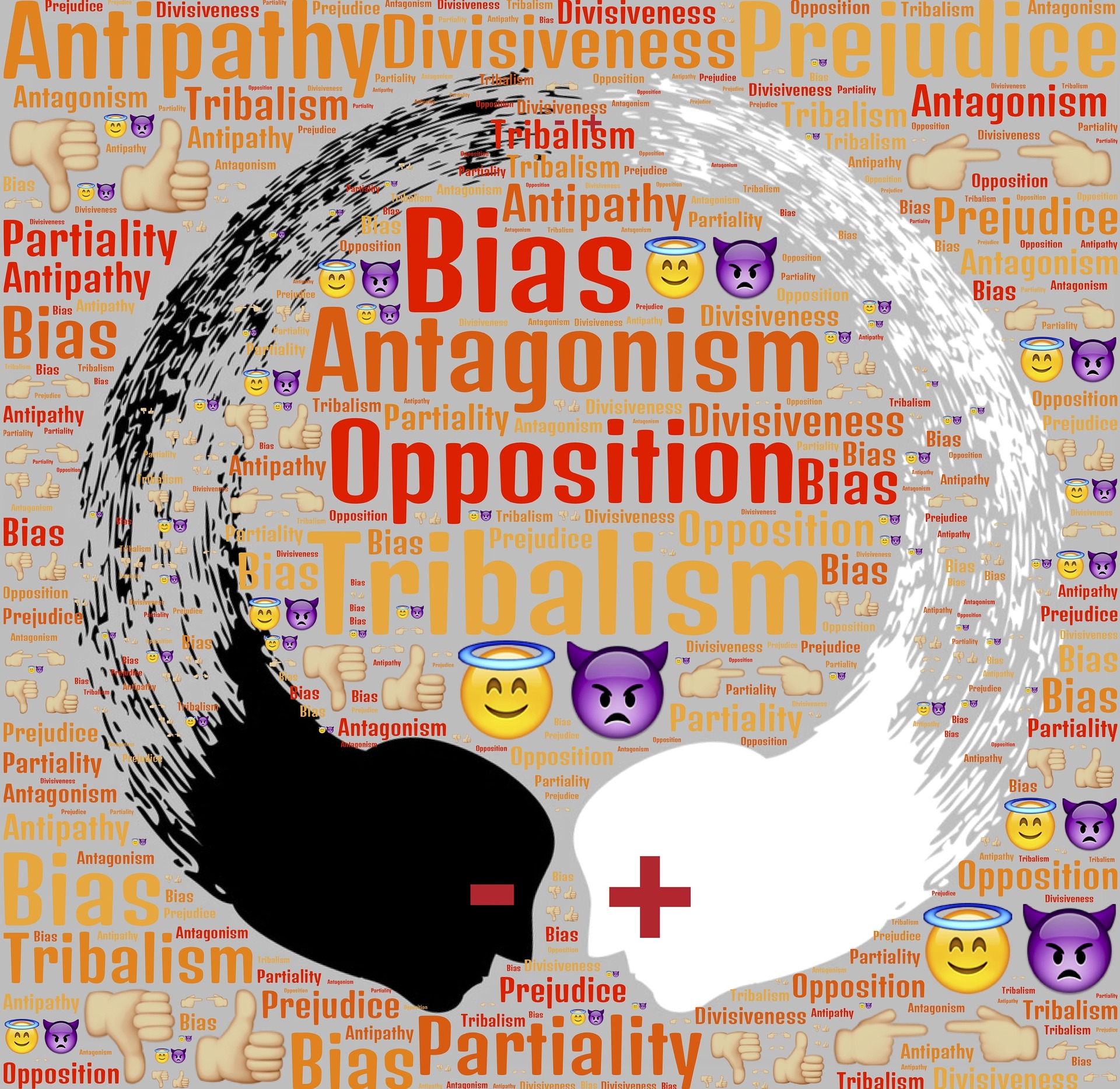
tribalism-1201697_1920

While I know that over 60 million Americans have been celebrating all week, this post is for those of us who have been feeling grief, fear, and/or anger since the news of Donald Trump’s election. So much has been said already that I question adding my voice to the sea of others. And yet, for me at least, the written word was made for times like these. Writing allows me to touch deep inside to the parts that are huddled in fear and despondency, and forge a pathway of connection to others, known and unknown.

This past week, my heart has wept for the rift in our communities. For the hatred that has already been unleashed against people of color, GLTBQ, Jews, Muslims, people with disabilities, women and so on. For the defacing of our schools, public buildings and parks with swastikas and words of separation. For the planet and a potential speeding up of climate change. For those who voted for Donald Trump in the hopes that he could bring in more jobs, national security, lower taxes for the poor and middle class, and dismantle political corruption. This past year, research for a novel I’m writing has led me to read extensively about the Great Migration, the Jim Crow era, lynching and mob mentality, and the Great Depression. Watching the events unfolding, I feel like I’m witnessing history repeating itself, and fear we have taken a giant leap backwards.

I also feel hope. Having spent years doing humanitarian and human rights work in communities and countries ravaged by civil war, occupation, martial law, and dictatorship, I know the depth of human resiliency – the will to survive that burns brighter in the face of adversity. The solidarity and courage that arise when one’s very identity and livelihood feel threatened. The election has shaken many of us out of a false sense of complacency and shone a light on the vast differences in experiences and understanding in our populace. Although I know the cost will be high, I also believe that crises and change appear to teach us what we are needing to learn (individually and collectively). This time is an opportunity to look under the veneer of civility to the real pain, anger, disenfranchisement and divisions that have been exposed for all to see, and begin the difficult, arduous journey towards healing.

May the strength of our collective shadow be a beacon for each of us to reconnect to our light and our wholeness. May we learn to love those who disagree with us. May we transcend small-minded scarcity and otherizing to feel the interconnectedness of our pain, the worthiness of each of our dreams, the fallacy of placing our faith in any one leader. May we have greater understanding for each other, and greater compassion for those fleeing autocratic and repressive regimes.

Understanding our collective shadow

In previous blog posts, I have written about fear, our shadow, and self-sabotage. As Carl Jung defined it, our shadow side refers to all the parts of ourselves we have disowned or repressed – including lust, rage, greed, self-centeredness. Folks, welcome to our collective shadow (click here for Deepak Chopra’s analysis on Donald Trump as the country’s shadow). To understand what is happening on a national and global level (the US elections follows in the wake of a number of European countries electing conservative leaders in the past year, and a potential far right win in Austria), I find it helpful to explore how these phenomena show up on an individual level.

As children we all learned that certain parts of ourselves were acceptable, while we needed to hide others, causing us to feel an internal split between different parts of ourselves. There is the part of us striving to be good/accepted, the part of us that feels marginalized and left out, the parts we have developed to defend ourselves, and our inner critic/saboteur – who harangues and mocks the other parts. The split causes us to fragment from our essential truth of being whole and enough. It is also fueled by a belief in a separate self, and that to feel enough/right we need to win over anyone who disagrees with us.

Inner crises occur when the fragile homeostasis we developed as children is getting shaken up. The marginalized parts of us, and our wholeness, are wanting a voice and are shaking up the status quo, while the parts of us that learned it wasn’t safe to be too visible hunker down and try to sabotage us. This crisis may show up as depression, rage, addiction, self-destructive behavior, dissociation etc. In my experience, the only way to move through the crisis is to start understanding what each part wants for us, and to start having compassion for each one.

We are currently experiencing and witnessing these divisions on a national and global level. It is tempting to demonize the shadow, since its ramifications are potentially so nefarious for many of us and particularly the disenfranchised parts of our society. But resisting the shadow only reinforces it (since it is the energy of opposition that created it in the first place).

For many of us, the election results have triggered feelings of shock and put our bodies in survival mode. When we go into a state of flight or flight, our prefrontal cortex (or cognitive brain) goes offline, making it easy to spin out into fear or anxiety. The following are tips for beginning the individual healing process so we can better access what needs to be done from a grounded place.

#1 Feel your feelings

While this may sound trite in light of the magnitude of what we are facing, I invite you to feel into what is coming up for you – the outrage, helplessness, grief, anxiety, shock and so on. See if you can stay with those feelings, and give yourself empathy. These are difficult times, and many of us want to jump over our discomfort straight into action. While action is important, allowing for what is there is an important first step. The feelings that are there may be overwhelming, however, so this is also a time to seek out community and bolster your support networks (see below).

#2 Heal old wounds

For many of us, the feelings that are coming up around the elections have triggered old wounds and/or traumas which left us with feelings of helplessness, rage, grief, terror betrayal, abandonment and so on. For example, we might be reliving feelings of terror at being left with caretakers who were dangerous or untrustworthy, or memories of being bullied for being different. Now is a time to reach out for help (be it from your community, spiritual practice, a mental health professional and so on) and continue to heal the beliefs and coping strategies we developed to survive.

# 3 Find your grounding

When we are in a state of shock, many of us (especially if we have a trauma history) leave our bodies, and search for solace in external factors, such as our thoughts, information, other people, food, etc. Since the elections, I’ve noticed myself having a harder time being present than usual. Part of me is impatient to get it over with so I can get on with “more important business.” Namely news binging, since being informed gives me some semblance of control. My distractibility is a clear indicator that I need the meditation more than ever, so much to my mind’s dismay I’ve increased my practice time and have slowly dropped back into myself.

I invite you to find ways to stay in your body, and to be very gentle with yourself. Breathe. Exercise. Take walks. Slow down, even when the sense of urgency tugs at you. Take breaks from the news and social media. Get massages. Take hot baths. While these may seem like luxuries, we are in this for the long haul, and the only way to access connection to ourselves and others is if we are in our bodies.

#4 Practice gratitude and generosity

It is easy to fall into a spiral of fear, grief and anger, and forget everything else. Now that you have felt into and begun to heal the feelings that are there, I invite you to remember all the things that you are grateful for in your life. Also send gratitude to yourself for doing whatever you need to be doing right now.

The current climate has unleashed insider-outsider tribalism and territoriality. Shutting down and wanting to defend is a normal response to current events, and in cases where we or someone else is being attacked, stepping in/defending is required. When we are not under direct threat, however, can we expand into more mindfulness, more compassion, more generosity for each other – while still speaking out for justice and equality?

#5 Send compassion to your shadow

Ho’oponono is a Hawaiian practice of forgiveness and reconciliation that recognizes that whatever is happening externally is a reflection of our own beliefs and reality. I believe that a first step to healing the collective shadow is to recognize the parts of ourselves that are being mirrored, or that we have separated from. While self-righteousness and “us versus them language” may feel warranted, it only serves to further entrench us in misunderstanding and mistrust.

I invite you to feel into the parts of you that are selfish, angry, judgmental, holier than thou, greedy, defended. And as you feel into each one, you can say the following words “I’m sorry. Please forgive me. Thank you. I love you.”

© Jenny Brav


In the Aftermath of the Elections…2017-06-23T02:16:02+00:00

Lessons from my Lost Fingertip

(Or 5 tips for checking back into your life)

Have you ever felt that there are moments when you are checked out of your own life? Do distractions, worries, and/or the busy-ness of life make it difficult for you to be fully present and focused?

 “Sometimes letting things go is an act of far greater power than defending or hanging on.” 
― Eckhart Tolle

water-1759703_1920

A moment of inattention

A few months ago, I sliced off the side of my left fingertip in a moment of inattention. I had been suffering from a virus for the past two weeks and was feeling depleted. The day before, I had attended a powerful 12-hour healing workshop. I woke up the next morning feeling exhausted but motivated. I had managed to block off five hours to write in my novel, and decided to make a big pot of soup before I started to sustain me through the day. Listening to a Pema Chodron podcast on “uncovering warmth in our hearts,” I started chopping kale. My knife was a little blunt, so I got out a new knife my housemate had just bought. A moment later, I was in excruciating pain, and a ½ inch of skin was on the chopping board, nestled in a piece of kale. My plans to write went out the window, as I spent the next weeks nursing my finger.

Being someone who takes pride in living mindfully, I felt shame at having hurt myself so mindlessly. And yet the incident taught me invaluable lessons in surrendering to what is, and releasing any expectation of how I thought things should be. In Traditional Chinese Medicine, the point I shaved off is the first point on the Large Intestine meridian, which is associated with letting go. In the weeks following the mishap, I worked on releasing remaining layers of old fears from my childhood around being visible and fully present in my body. I also cleared some old ancestral beliefs (especially in my paternal lineage) that it’s not safe to pursue one’s dreams. That the only way to survive is to stay under the radar and not be too visible. My father broke that trend when he moved to Paris to be a writer in the early 1960s, but his failure to achieve his dream weighed heavily on him. He died young of a heart attack, and doing my healing work I realized that I had absorbed some of his ambivalent energy towards writing and following his purpose.

As I witnessed the miracle of my skin growing back a little bit each day, I could feel myself start to inhabit my body more fully. And the next time I sat down to write, I felt the words start flowing more easily, as though they were coming from a different part of my being. I wasn’t trying to make something happen, but rather was opening up to what wanted to come. And the remaining ball of tender scar tissue is a daily reminder to return to myself.

The following is an invitation for you to explore how you check out and why, as well as tips (no pun intended) for being more present.

1) Recognize your distraction pattern

We live in an era where distractions abound, and it takes dedication and effort to be truly present with ourselves and others. What are your favorite ways to check out or distract? This could include working overtime, shopping, eating, checking social media, playing Pokemon, binge-watching on Netflix, obsessing over the elections, etc. Although the line between what we do for entertainment and ways we distract can be blurred, the latter is often characterized by excess/difficulty finding an off switch, and feelings of shame afterwards. Start identifying what kinds of emotions and situations increase your distraction patterns (for example, stress at work, feelings of loneliness, an argument with your partner, and so on).

2) Identify your triggers

Now that you are paying attention to how you distract, think of what kinds of situations make you want to distract. Is it external demands, feeling overwhelmed, a feeling of not being enough for the task at hand?  Do you tend to distract more at a certain time of day? Trace this feeling back in time. When did you first start checking out or distracting? What was happening back then, and what were you feeling about it?

3) Track your excuses/justifications

Notice the excuses you make to justify the patterns. For example “I’ve worked hard, I deserve this.” Underlying the excuse is a belief about yourself and/or the world. It may be that you are all alone, that the world is unfair, that you need to fight to get what’s yours, or that you are not enough. As with the triggers, there is a reason you developed those beliefs.

4) Acknowledge the distraction for how it has helped you

Distraction patterns are indicators of parts of us that didn’t feel safe or welcome. For anyone who has suffered from trauma, dissociating may have been key to surviving. In any case, you learned to distract or check out as a way of avoiding something, for example to numb the pain of having parents who weren’t present (physically and/or emotionally), or who were fighting all the time.  Send gratitude to this pattern for all the ways it has served you.

5) Practice staying with what is arising

Although checking out can bring momentary relief, whenever we leave ourselves it creates an internal vacuum. Upon returning, we may have an even deeper sense of despair or shame, giving us little incentive to want to stay present with what is.

I know that mindfulness and presence have become buzzwords, but they really are the only way through the things we are wanting to avoid. So when you feel the pull to distract, or your habitual thought patterns pulling you into worry or anxiety, I invite you to breathe. Stay right where you are. Notice any discomfort that arises, and breathe into the discomfort. Feel into what is wanting to hide, what you are trying to avoid. You might want to squeeze or pat up and down your body, since presence is an embodied state, and this is a way to delineate the contours of your body. And start feeling into the possibility of letting go of some of the old habitual patterns that served you once, but are now only keeping you from what you are most wanting. Connection. Wholeness. Aliveness. Permission to be fully yourself.


Presence is my breath nudging its way into the logjam of my thoughts;

It is the syncing of my nervous system, my mind and my heart,

And the contours of my world coming into sharper focus.

Presence is a reminder to be patient and to trust;

It is the loosening of my stranglehold on control;

And an opening to limitlessness.

© Jenny Brav

Lessons from my Lost Fingertip2017-06-23T02:16:02+00:00
Go to Top